A Generational Lesson
By Anthony Casperson
7-18-26
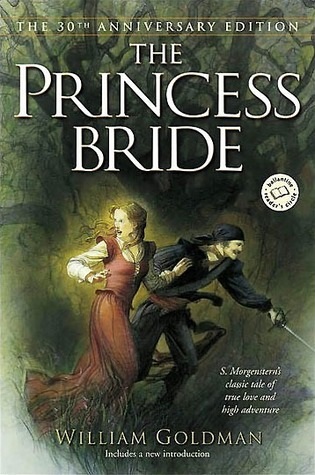
While the film version of The Princess Bride stands as the most commonly experienced rendition of the story, it’s actually William Goldman’s book that can help shape our thoughts for today’s blog. Mainly, this is because I’m talking about the frame narrative for the story rather than the plot of Princess Buttercup and Westley.
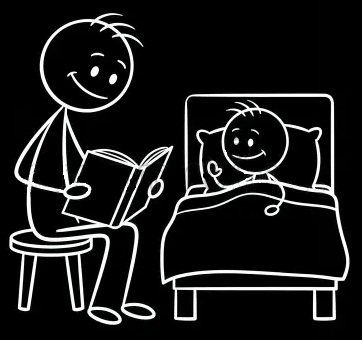
Unlike the film, where the story is read by a grandfather to his grandson, the novel is a fictional account of the author’s experience with a supposed story that his father had read to him while he’d been sick as a child.
This fictionalized version of young Goldman hadn’t realized that his father had skipped large portions of the book, cutting out the boring parts and only focusing on the adventure and romance. The idea had been that the novel’s version of Goldman’s father had been an immigrant who struggled with English so much that he just skipped to the easily read parts.
However, it was enjoyment of this interaction with his father that the younger version of Goldman pointed to as the core of their relationship. He felt a connection with his father that he hadn’t at any other time previous. The sharing of story from father to son was a core memory of his.
The Goldman in the frame narrative only realized that his father had abbreviated the text after trying to accomplish something similar with his own son. There had been distance between the pair, and so Goldman had handed the story to his son and suggested he read it. But the son came back later saying it was boring. When Goldman questioned why, he opened the story to realize the truth about his father’s abridgement.
Thus, the narrative declares, Goldman decided to write The Princess Bride as a way to pass on the story that had meant so much to him, and had begun a deep connection with his father through that story. And in so doing, Goldman hoped to share with his own son the same beloved story that his father had shared with him.
A father shared with his son, who in turn grew up and shared the same thing with his son.
For the Goldman men, it had been a story of adventure and romance, but in the writing of Proverbs 4:1-9, it is wisdom that is shared. And because we’re in the middle of Solomon’s Summer School, going through the first nine chapters of Proverbs during this season, we can join the son in enjoying the same offering of his father.
These first nine verses of Proverbs 4 show Solomon call his son to share the wisdom of his own father. It’s a generational passing on of teaching that is greatly lacking in our culture. And while the lessons from Proverbs 1-9 are all shown to be Solomon passing the teachings of wisdom to his son, this section specifically calls attention to the multigenerational aspect of the lesson.
Verses 1-2 of this fourth chapter starts off sounding much like the rest of the lessons. Solomon calls out to his son, to come close and hear the words of wisdom. And we’re reminded once again that wisdom isn’t just theoretical understanding of nebulous philosophy. There’s a real and practical aspect to wisdom.
The “instruction” of verse 1 carries with it the idea of correction, discipline, and warning more than lecture. It’s a father seeing his son try something and not fully succeed, and then coming alongside to show him how to do it better.
Likewise, the “insight” at the end of that same verse shows the father explaining how to read the signs of reality around them to ascertain the truth of their existence. As verse 2 explains, this attention should be given because the lessons are good for life. And thus, the teaching—literally the Hebrew says “law”—should not be abandoned.
But before the father starts sounding too arrogant about his own words, he explains that he’d already done exactly what he’s asking his son to do. His own father had shared these words of wisdom. And so, the practical application of the words had already proven themselves to be applicable to life in Solomon’s own experience.0
The rest of the section is shown to all be his father’s words, but verses 3-5 give us the explanation about this sequence of events. Verse 3 itself explains a lot about when Solomon had been taught to heed these wise words.
His father had shared with him when he was young, and still the only of his mother’s children. “Tender” is the term specifically used. Young, delicate, and shy might have the right kind of connotation for the word, but I find it interesting that the word could also mean sick, frail, and weak.
Like maybe when he had been lying sick in his bed and his father wanted to connect.
Solomon’s father told him to cling onto wisdom and never let go. He had been told to guard and watch over the words. These commands could mean the difference between life or death one day. Verse 5 shifts the image a little, while repeating the same idea. Solomon’s father had told him to purchase the skill and insight of wisdom, no matter the cost. For it is worth every penny.
As well, this lesson isn’t one that should only be remembered long enough to take a test and then forget it. The teaching of wisdom isn’t something so boring that you have to stretch in the middle of, lest you fall asleep. No, this is critical for life.
And so, Solomon shifts the story, as his father before him had done, to focus on the romance of Lady Wisdom personified. It’s almost like the generational wisdom calls all to cling to the same beauty that each of their forefathers had come to fall in love with.
Don’t abandon or divorce yourself from wisdom. As long as you cleave to her, as long as you love her with our whole heart, she will guard and protect you. There’s a mutuality in this guarding. We saw as much in verse 4 with the guarding over the father’s commandments. Life is the result when we protect the value of wisdom, even as she wraps us in her own protection as well.
Proverbs 4:7 shows us a different angle on the same thing as Proverbs 1:7. The beginning of wisdom is the attaining of wisdom at any cost. That is what the fear of Yahweh means. Respect God, honor him, and show love for him and you will find wisdom. We will have paid the dowry for this beautiful arrangement as we praise and worship the Creator of all things.
Verse 8-9 show more of the mutuality between us and wisdom. When we prize wisdom, when we exalt her highly, she will return that exaltation. As we cling to her, she will honor us. A garland of grace and crown of glory she provides for us, when we are willing to say, “As you wish.”
Wisdom is our own princess bride who grants us the goodness of God.
This is the lesson of a father to his son. The same as was given to him by his father. It is a practically applied skill, shown generation after generation to be true. So, let’s not turn our noses up at this romance of wisdom. Rather, let us embrace her. And embrace the story shared by the generations previous to us.
And don’t forget, when the day comes, to pass on the truth of wisdom.