Divergent Paths
By Anthony Casperson
7-25-26
Shock overcame me. Appreciation rose as the primary aspect of that shock. I actually paused another thing I was doing to pay full attention at the moment.
I’d had on a lengthy YouTube video that integrated about a dozen people’s perspectives while playing a particular video game. But it wasn’t the game that gave me pause. No, the thing with which the presenters interacted was so bad that it could hardly be called a game. More of a curated memory simulator based off of the designer’s faulty idea of nostalgia which only occasionally required a button press.
As well, it wasn’t the game’s story drawing my full attention. That was a moral travesty which seemed to exalt the degeneracy of the drunken pyromaniac stoners who were somehow seen as worthy to be the protagonists of the tale.
To set the stage a little more about the story, the primary antagonist was the police officer father of the most recent addition to this trio of teenagers. He’d explained to his daughter that the other two were dragging her down. Her grades had suffered. She’d stopped being focused on the extracurriculars that had previously excited her. The father feared than she’d ruin her future if she continued spending time with the other two.
Honestly, he was right. At the end of the game, the trio ran away from a forest fire for which they were partially responsible. And when the father drove his police vehicle toward them, the daughter pulled out a lighter and threatened to make things worse if he tried anything.
While the father had been the only character to have any sense of a moral compass, the writers of the game threw it in the trash right here, because they had the father just tell the trio to leave while he drove off. Away from the raging forest fire, just outside the town’s borders.
Right here, the supercut I was watching flipped through each of the players’ shocked responses at this moment. And yet the rapid-fire reactions didn’t need to all be shown, because they were all essentially the same.
They spoke about how ridiculous the thematic element of this moment was. How could the writers really want to express the “virtue” of criminals not even getting a slap on the wrist? As a matter of fact, the lesson seemed to be that the police officer father was the one who’d needed to learn something.
And that thing was appreciating the fact that his daughter was having fun, no matter what the consequences might be.
Each one of the players raged in their own ways at this resolution. Few even wanted to interact with the last couple of button presses to end the game, because of how terrible the morality of this tale was.
It needs to be said at this moment that none of the players making these statements live what I would call a godly lifestyle. Yet even they could see how utterly ridiculous this idea of, “Just let people have their fun,” is as the purpose of a story. Repulsion struck them at this skewed morality.
This is why I had an appreciative shock.
Each of the players could see the fact that the father’s original perspective was the right one. Several had even paused the barely-interactable cutscene in order to agree with the father, saying that the people we allow to integrate into our lives greatly affects us, and thus we should be careful. And more than one of the players admitted to having learned that lesson the hard way.
Not a one of them viewed that father-daughter showdown as a celebratory victory. It was a failure of parenting. One player called it a character assassination of the father. But, they all agreed that it was a travesty of a tale for life.
Watching that part of the reaction video made me think about our passage for this week’s blog, Proverbs 4:10-19. In reality, it reinforces much of Proverbs 1-9 when it comes to the practical aspect of life.
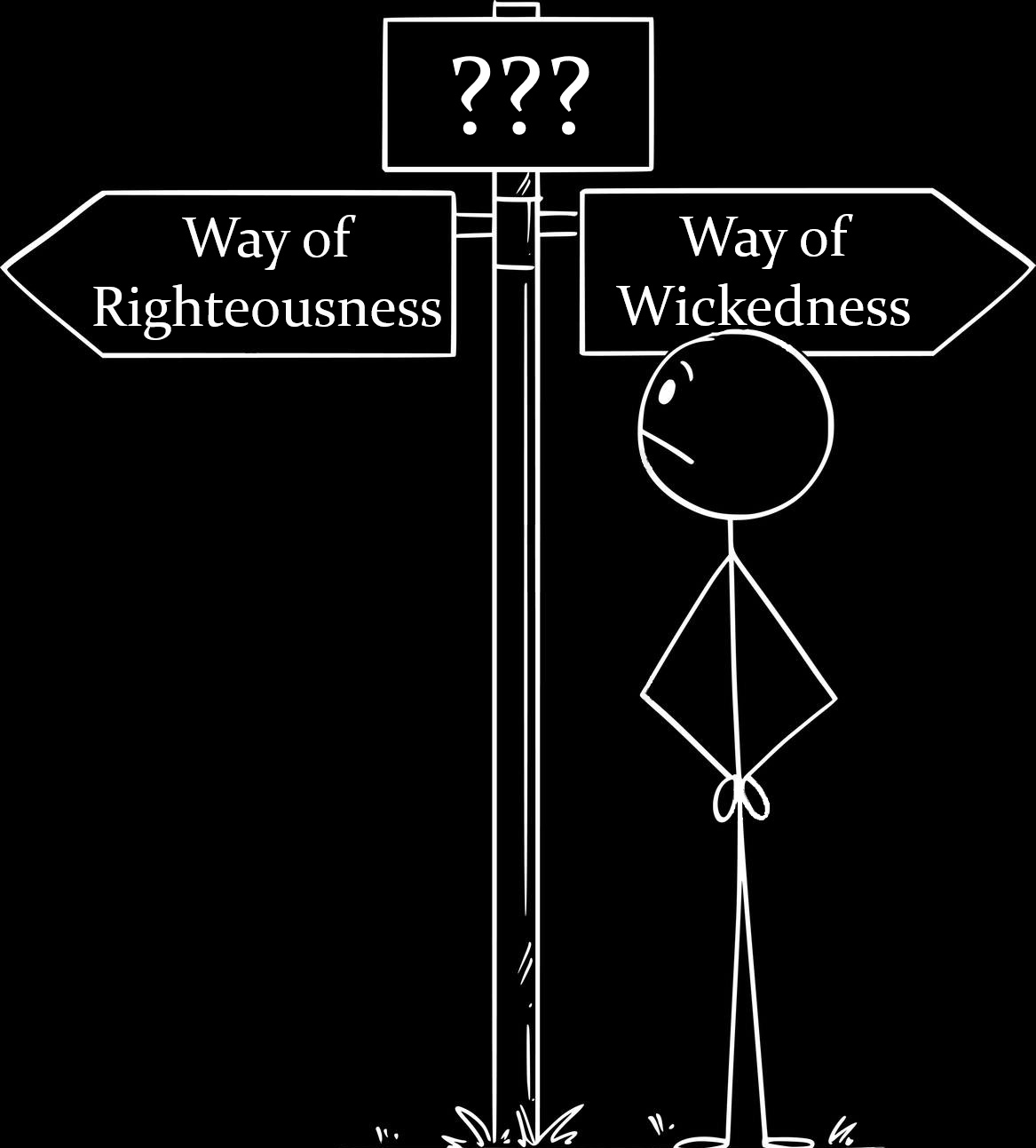
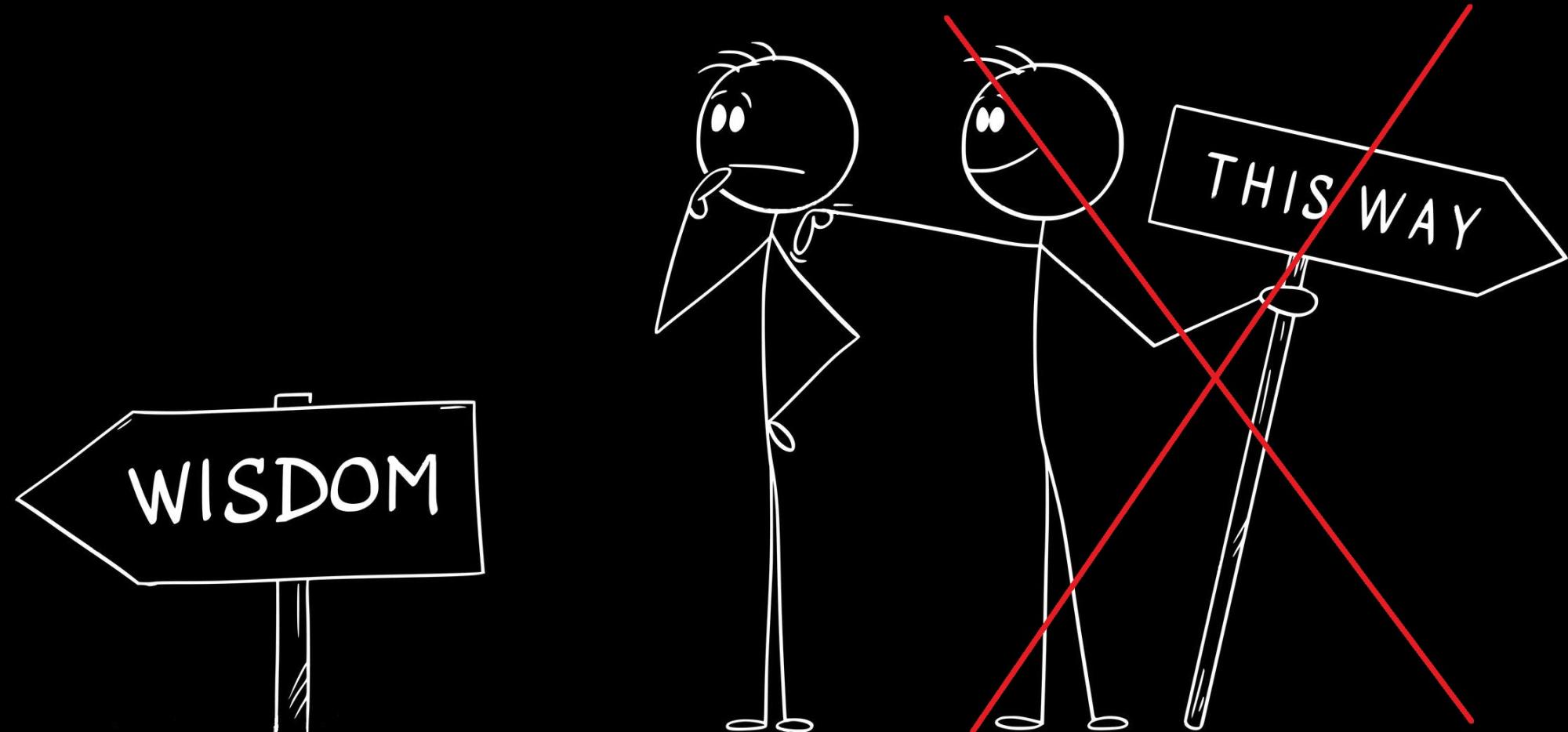
We all have two paths ahead of us. The path of wisdom, or the path of foolishness. And while many will call us to join them in their “fun” on the path of foolishness, that way leads only to death and destruction. Following them will have incredibly disastrous ends, no matter how much fun we have in the moment.
In our passage, Solomon digs deeper into this idea of the divergent paths ahead of us. He declares the direction of each way, and then puts the choice in front of us to make.
He begins in verses 10-13 showing us the way of wisdom. There, he asks us to take these words to heart. And it’s not to keep us from having fun, but so that our lives might be prosperous in this world. It’s out of care that this father calls us to listen.
The paths of practical skill in life and the deep-set trails of integrity and uprightness, these he has laid out so that we won’t stumble. He’s calculated our route so that we don’t have to worry about getting lost or hitting construction. The way prevents us from falling prey to traffic congestion.
During these lessons so far this summer, Solomon has taught us to fear Yahweh, to follow his ways and seek the wisdom he’s implanted in the world. And if we follow that, our path won’t squeeze the life out of us. Our feet will never get caught in a trap.
This practical application of fearing Yahweh will guard us. Every moment of heeding godly correction will lead to our benefit. And so we should refuse to release it from our grasp.
However, the path of the wicked is one we should release with all haste. The Hebrew word for “wicked” carries the idea of people who are guilty of violating the rights of others. Those who threaten entire communities. Violent, oppressive, and greedy people who plot against others and would even be willing to murder, if it meant gain for themselves.
Sounds a lot like someone who’d be willing to threaten burning down more of a forest plaguing a town’s boundary if they aren’t allowed their “fun,” doesn’t it?
This stretch of a ground, Solomon tells us to never enter. The way of evil should never feel our feet fall upon it. As a matter of fact, in verse 15, he tells us to avoid the area entirely. We shouldn’t even be willing to cross over it at an intersection. Giving in to the wicked way for even a second can tempt us to be taken by its flow.
And the people on it will entice us with great pleasures. But they are not satisfied unless they continue to do their wickedness. Verse 16 shows us that those on the path of wickedness can’t even sleep unless they’ve done something destructive or damaging. They call out to others to join them, but that call is bait for their trap.
If they can prove others are just as guilty as they are, then they can feel good about themselves and their desire to not change their lifestyle.
The ways of the wicked are as natural to them as breathing. It’s like they eat wrongdoing for breakfast. And they get drunk on the wine of violence. They can see no other way of life. And relish when they prove others are just like them. To ask them to change is anathema. Any who refuse them their fun is only an enemy against whom to wage a war.
So, at the end of this passage, we find ourselves at the divergent paths. One leads to the way of the righteous, where light might be dim for the moment, but will only reach for greater and greater illumination. And the other leads to the way of the wicked, where guilt is shoved under deep darkness, and traps for others can hardly alleviate the pain of that guilt.
One path leads to good and a life worthy of living. But the other leads to only threats of greater violence for any who try to stop the “fun.”
Which way will we go? Which one should we refuse to place our feet?
The answer’s simple enough that even those without a relationship with God can see it in the actions of others. But the difficult part is to make sure our own feet have kept to the way of God’s righteousness.
Let’s open our eyes, and take an honest look around to see if the forest is burning around us because of our own delinquent wickedness, or not.