Cheering, But Not Hearing
By Anthony Casperson
3-28-26
Around the protagonist, the crowd cheers. Smiling faces. Thrown gifts. And maybe flower petals flutter around the area. It looks like the greatest moment in these people’s lives.
But the perceived passage of time slows. Somber tones of music or wording sound. And the protagonist’s glance around those gathered reveals a hint of sorrow.
We know this scene. Have seen it in dozens of different tales, whether on screen or on page.
Salvation is coming for these people, but they don’t realize the cost. They think a golden age is coming, but they haven’t understood that it’s not going to look or work the way they think it will. Their hope is for freedom from their troubled lives, but they never looked closely enough to recognize the pain involved.
On the other hand, the protagonist knows. The hero steps ever closer to that cost. And this central figure to the people’s salvation readies to sacrifice themselves.
The day has two sides. One of cheer and one of somberness. But only those who have dug into the details of the promised salvation can see both.
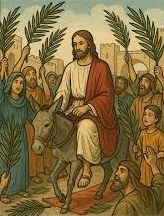
Quite a number of the examples we could name of this type of scene harken back to a real life event that many will celebrate tomorrow. Palm Sunday, the reminder of the day that Jesus rode into Jerusalem on a young donkey to the cheers of the crowd.
They placed palm branches before him. Cried out for the salvation he was to bring them. And thought he was going to end the oppression of the Romans in their land.
Freedom and a return to the golden age of the Davidic kingship was in their minds.
But Jesus knew the next week would hold a day that would be the darkest and yet most beautiful in all of human history. Those cries of “Hosanna” would shift to “Crucify him” before the week was done. And the Romans weren’t the enemy he was here to defeat.
This entrance marked the beginning of the week that the promised salvation would come. But the people missed the difficulties in it because they only remembered half of the prophecy.
They had thoughts of, “This is the day that the Lord has made,” but forgot that every “Day of the Lord” has celebration mixed with sorrow. Their memory conjured up the call that God’s “steadfast love endures forever,” but forgot this covenantal faithfulness required a covenantal sacrifice.
When those crowds on the first Palm Sunday shouted “Hosanna”—translated “Save us”—they were calling back to the words of Psalm 118:25. “Save us, we pray, O Lord! O Lord, we pray, give us success!” Success against the agents of Rome, was their thought.
And the surrounding verses showed the people that rejoicing was expected. This was a marvelous work of Yahweh. A day that the Lord had made. A time for them to rejoice, and bless the Lord who welcomed them into his house.
But their myopic vision of God blinded them to the fullness of the situation. The god they worshiped was much smaller than the God working among them.
Because of this, they missed the larger context of the verses they were quoting.
Psalm 118:22 is the place where the words of “the stone that the builders rejected has become the cornerstone” come from. This rejected cornerstone is part of the Lord’s doing. It’s a piece of Yahweh’s marvelous work. The rejection of “Crucify him” is built into this “Day of the Lord.”
And while Psalm 118:27 mentions that Yahweh, their God, has made his light shine among them, it also shows that this light of the world is a festal sacrifice bound up with cords and placed upon the altar—the light of a burning offering to God. This God we thank, this God we praise, this God whose covenant faithfulness is eternal. He’s the one who calls for the sacrifice to shed blood for the covenant he has prepared.
The place where that crowd got their cry of “Hosanna” from was bookended by prophetic words of sorrow and sacrifice. Their salvation came at a cost. And they didn’t even realize it at the time. Because they were so narrowly focused on their own desires to recognize the fullness of the work of God around them. Their own wants blinded them to the words that were plain to see.
They cheered for the joy they expected, but they refused to hear the fullness of God’s word and work among them.
But they’re not alone, are they?
How many times have we called out for salvation without realizing what God is already doing in our lives through the difficulties? How often have we laid claim to promised peace and goodness without remembering the point of a life of wholeness with God? How long have we stared at a verse or two without widening out our vision to the context, which allows us to realize the bigger picture of God’s marvelous work that includes the sorrow and somberness?
As we celebrate the salvation brought to us by our Savior throughout this coming week—and into the next—let’s keep in mind both sides of this “Day of the Lord.” Let’s not just look to the joy of the salvation, but to the costly purpose God has through it.
Let’s not just cheer like the oblivious crowds, but also hear the subtle changes of tone that our masterful Storyteller has prepared for us.