The Cave of Silence
By Anthony Casperson
11-28-26
It’s that time of year again. Bright lights hanging. Cheery songs resounding. Smiling faces beaming.
But it’s also that time of year again. Dark thoughts encroaching. Heavy hearts breaking. Down-turned eyes mourning.
The weeks between Thanksgiving and Christmas are often used to draw our gazes to the Light of the world, whose first coming we celebrate. And while the celebration is almost always done through the happier side of the season, those who’ve been around Brushstrokes of a Theonerd long enough understand that we don’t tend to do things that way around here.
This season where depression hits harder, where forced smiles hide heartache, and where stress abounds more often than we’d like to admit, can invite our eyes to our Lord Jesus just as much as the cheery side of the celebration.
If we let it.
When we stand in faith, despite the lack of quick and easy answers, we can step ever closer to the one who calls us to his strength. Our faithfulness shouldn’t be reliant on the fact that answers have come for certain, but that we know the God of the universe. And we are sure that he’s in control, even when things don’t go the way we want them to.
Silence can be just as much a call to faith as the flashing lights of the season.
Before Jesus’ birth that amazing night in Bethlehem, there had been centuries of silence from God. Four hundred years had passed between Yahweh’s last recorded words through his prophets, and his preparation for the coming of Jesus. Generations lived and died without hearing directly from God, and a number maintained their faith through it all.
So for these four weeks, we’ll be reminded of the silence that calls us to deeper faith while looking at a handful of Psalms. Not upbeat songs that try to elicit unfelt smiles. But rather, rhythms that beat in time with a faithful heart that hears no easy answer.
Each psalm will go deeper and darker than the last. But with each, we’ll be reminded that the silence is a call to fuller and richer faith.
And this first week’s song, Psalm 142, is just the one to start with.
We see that this psalm is a type of song called a maskil. It carries a sense of deep angst in the songwriter. And the rest of the title’s words tell us that it was David who wrote this song while in a cave.
He penned the verse while on the run from King Saul. Yahweh had anointed David as the next king of Israel, but that promise seemed so far away from reality. What kind of king lives in caves, like a wild animal being hunted? His present circumstances and what he knew to be true of God’s view of him didn’t match. And so he cries out in confusion and heartache.
But notice, in verses 1-2, he doesn’t let those questions or complaints keep him silent. No, he releases the doubts in pleading words. And sends them straight to Yahweh. The one in control of all these events.
And just being willing to open his mouth allows him to take that step closer to God. Take a look at the pronouns David uses of God in verses 1-2, and then the ones he uses from verse 3 and onward. At first, God felt distant. Over there. Yahweh was “him.” But once David decides to cry out his complaint to God—once he sought Yahweh—that “him” turned into “you.”
“When my breath weakens, shudders, and sighs, you know my way.” Right as David admits his weakness, he takes the step so that the God who had been called “him” becomes “you.” There’s power in such faith that admits our own weakness in continuing on.
This is especially true when we speak of Yahweh, the Creator of the universe. Because he knows us. This verb for “know” is the deep and intimate “know” of a close companion, a loved one, even of a spouse from whom one holds no secret.
The weakness of a faint spirit doesn’t surprise God. And he’s there waiting to walk through this darkness together, whatever the outcome. The rest of verse 3 tells us that even with God walking alongside, a trap may be set. A snare to snap at our heels. So, an easy, happy, and good path is not guaranteed.
As well, we might look to our right and left, while seeing no other human companion. No person who knows or cares about the difficulty we’re experiencing. No friend to hold us in their arms. No compatriot to provide a shoulder to cry on.
But notice that even though David says there appears to be no refuge for him—no human with whom to shelter—he still stands assured that Yahweh is his refuge. God is the place of solace in this life’s darkness.
Yet, it is important to notice that this assurance isn’t because God has shown the way. There is no bright light explaining every step along the road. There doesn’t even seem to be light for the next step in the path. Just David’s faith in the God he knows and worships.
In the last two verses of the psalm, David cries out again for deliverance from persecutors, and to be released from his prison of exile, but there is no answer from God. No promise of when that deliverance will come. No release date. Just assurance that the faithful God will work.
Despite the silence.
Now, we today have the gift of knowing God did answer this faithful prayer. David did get released from his time on the run. He became king. And it is through his descendants that our King of kings fashioned his physical form.
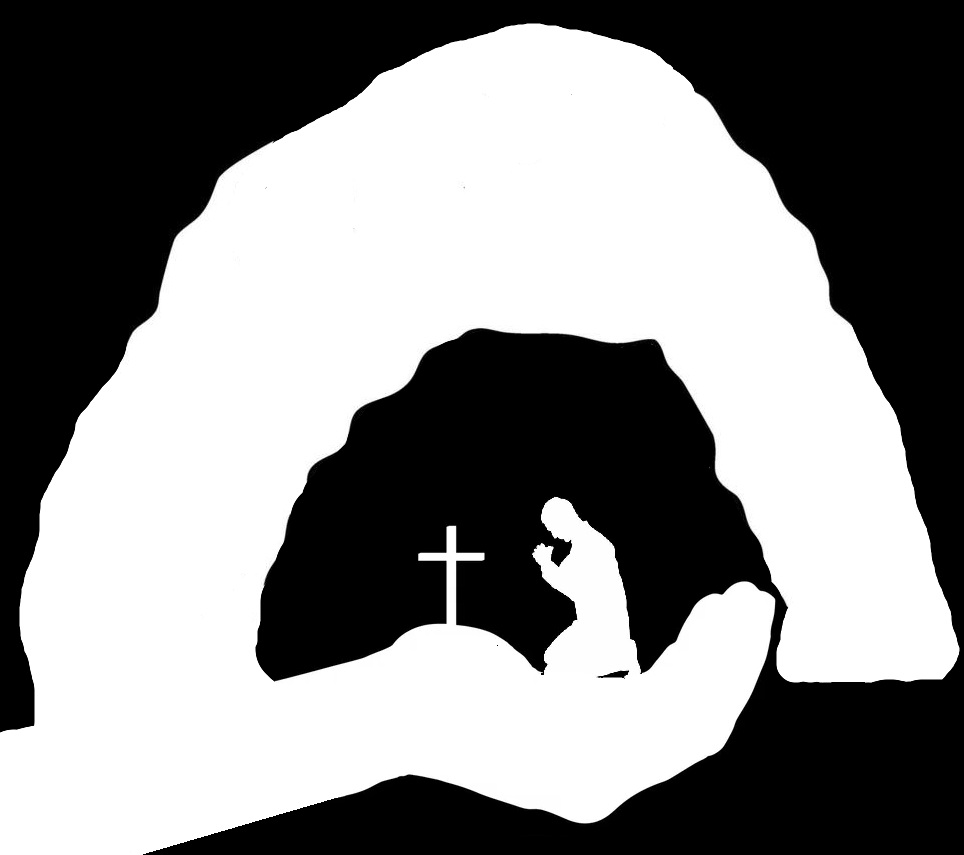
But in that situation, David had no clue what was to happen. All he knew was the silence. That dark and empty cave.
And the God worthy of such faith in the silence.
So, if you’re one of the many people feeling alone in the dark cave of depression, anxiety, loneliness, or so much more, listen to the silence. It’s not proof of some failure in you, but a call to step closer to God.
Step in faith. Admit your weakness, even if it comes out as a broken sigh. Because he is there when no one else seems to be. He’s a refuge when we have none.
And sometimes, his silence is proof that he’s working something unprecedented, like taking on the form of humanity to lead us into right relationship with him.